Understanding Skin of Color: What Every Esthetician Needs to Know
 Ms. Tasha W.
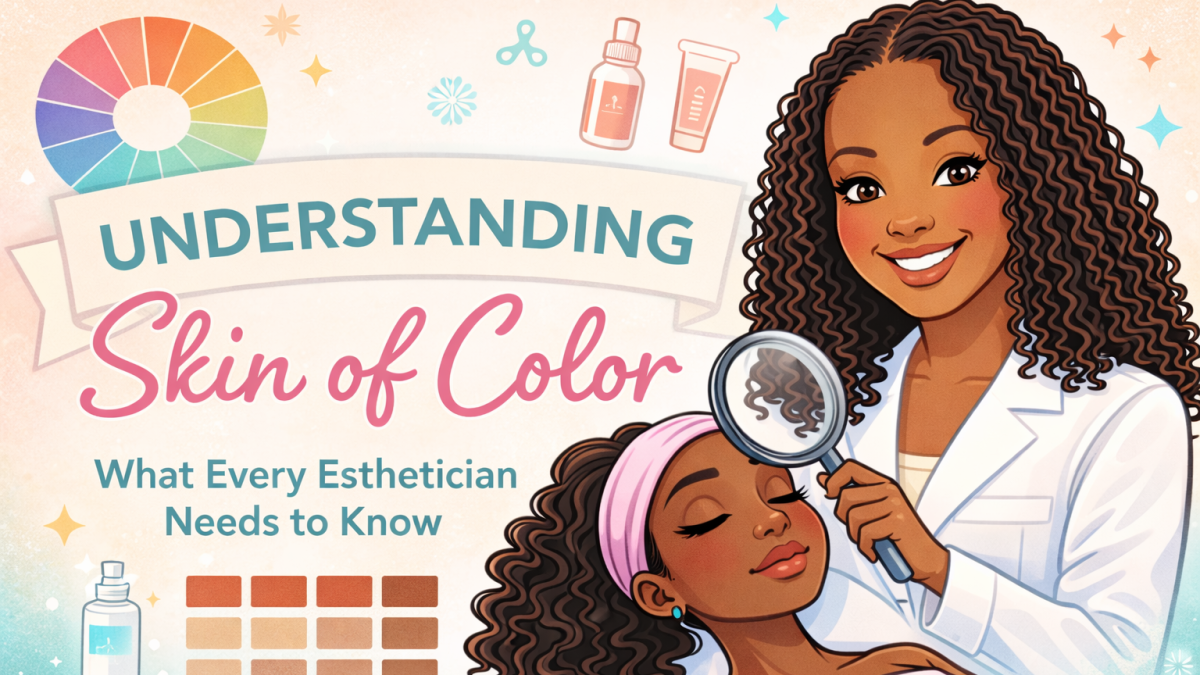
Discover how skin of color differs in healing , aging and pigmentation. Learn expert tips for safe, effective treatments for melanin-rich skin.
Let’s talk about something crucial in skincare—skin of color. As estheticians, we must understand that melanin-rich skin is not just about deeper pigmentation. It’s about structure, function, and how the skin reacts to treatments, trauma, and the environment. So, let’s break it down!
Why Does Skin Color Vary?
Skin color is one of the most striking human variations, shaped by genetics, environment, and other factors we’re still uncovering. In sunny climates, darker skin evolved as a natural defense—melanin acts like a built-in sunscreen, filtering UV rays and reducing the risk of sunburn and skin cancer. But melanin does much more than just protect—it plays a significant role in how skin ages, heals, and responds to treatments.
With increasing globalization and diverse populations, we now see a beautiful spectrum of skin tones and hair textures worldwide. Terms like ethnic skin, skin of color, richly pigmented skin, and darker skin tones are often used, but what matters most is understanding how these skin types function—not just how they look.
Key Differences in Skin of Color
Melanin-rich skin isn’t just about more pigment; it’s structurally different too:
• Thicker & More Compact – The epidermis tends to be denser, offering some natural protection but also affecting product absorption.
• More Active Melanocytes – While all skin types have roughly the same number of melanocytes (the cells that produce melanin), darker skin produces more melanin that is dispersed differently. Instead of breaking down quickly, as in lighter skin, melanin in darker skin is stored in larger, single-dispersed granules that persist longer.
• Hyperreactive to Injury – Even minor trauma—like a pimple, scratch, or over-aggressive exfoliation—can trigger an exaggerated response, leading to hyperpigmentation (dark spots) or hypopigmentation (light spots).
What This Means for Aging & Skin Conditions
Melanin provides built-in photo-protection, which means:
✅ Less sun damage – Wrinkles, actinic keratosis, and fine lines appear later compared to lighter skin.
❌ More post-inflammatory pigmentation (PIH) – Dark spots left behind from acne, burns, or aggressive treatments are more stubborn and long-lasting.
❌ Higher risk of keloids & hypertrophic scars – Healing in deeper skin tones is different and often results in raised, thickened scars.
Treating & Caring for Skin of Color
Because of these unique characteristics, treating skin of color requires a different approach—what works for lighter skin won’t always work here.
✔ Be gentle! Aggressive treatments can backfire, triggering unwanted pigment changes or scarring.
✔ Early inflammation control is key. The sooner you calm irritation, the less likely it will turn into dark spots or uneven tone.
✔ Be mindful of exfoliation. Over-exfoliation can lead to unwanted pigmentation—think smart, not aggressive.
✔ Demarcation lines are real. Uneven pigment from chemical peels or lasers can create stark contrast, so choosing the right treatment depth is everything.
✔ Sunscreen is non-negotiable. Hyperpigmentation worsens with UV exposure, even in deep skin tones—SPF is a must!
The Takeaway
Skin of color is not just a deeper shade—it has unique needs that demand specialized care. As estheticians, understanding how to respect and treat richly pigmented skin properly is a must to avoid complications, ensure safe treatments, and give clients the best results possible.
This is just the beginning of our deep dive into caring for diverse skin tones. Stay tuned for videos, live training, and expert insights—because when you know better, you do better.

Ready to Actually Learn This Industry the Right Way?
If this post hit home, you already know… education matters. Inside Spa Bevy, we go deeper—real training, real guidance, and a community that actually supports you.
- ✔ Real esthetic education (not guesswork)
- ✔ Monthly live coaching
- ✔ Treatment + product guidance
- ✔ A community that actually gets it
Your journey doesn’t stop at school—and you don’t have to figure it out alone.